
Organizations can invest significant effort developing strategies while giving less attention to the people expected to deliver them.
But meaningful change can require leaders and teams to think differently, make different decisions, develop new capabilities and take greater ownership of the outcome.
Peter’s approach connects development directly to those challenges.
Rather than treating learning as something separate from the organization’s strategy, it becomes part of making the strategy possible.
Don’t develop people for yesterday’s organization. Develop them for the organization you’re trying to become.
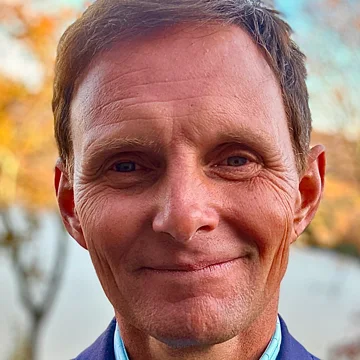


Peter approaches development as both a practitioner and educator.
His work combines structured learning with discussion, challenge, case examples and lessons drawn from decades of professional and international experience.
It’s to change the quality of thinking that happens after the session ends.
Leadership becomes particularly important when circumstances change, resources are constrained or an organization needs to move somewhere it hasn’t been before.
Peter combines leadership frameworks with lived examples to explore how leaders create clarity, make decisions and maintain momentum through uncertainty.
Transformation can require people to abandon familiar assumptions, responsibilities and ways of working.
Development helps leadership and teams understand not only what is changing, but why the change matters and what their role within the new organization needs to become.
Peter’s international experience provides a practical foundation for examining development, institutions, resilience and leadership in environments where simple answers are rarely sufficient.
The emphasis is on connecting theory with what actually happens when ideas encounter people, systems, cultures, constraints and changing circumstances.
Peter’s “Einsteinian Hour” approach creates deliberate space for leaders and teams to step outside familiar thinking.
Instead of immediately trying to solve a problem as it has been presented, participants examine the assumptions surrounding it.
What are we accepting as fixed?
What aren’t we seeing?
What would have to become true for a radically different outcome to become possible?
These sessions can form part of a broader development program or work as focused strategic interventions with leadership teams.
Better answers often begin with better questions.
Peter’s approach to teaching is grounded in the idea of being a Professor of Practice.
His educational work draws on graduate-level teaching alongside decades of practical experience across international development, strategy and leadership.
That allows theoretical ideas to be examined alongside situations where decisions had real consequences.
Peter’s role isn’t simply to explain the theory.
It is to bring experience into the conversation and ask:
What happens when we actually try to apply it?
Peter’s approach creates deliberate space to step outside the familiar way of thinking.
Rather than immediately accepting the problem as presented, leaders examine what they are treating as fixed, what they may not be seeing and what would need to become true for a different outcome to become possible.
The challenge can be viewed from a broader strategic perspective, creating space to identify overlooked possibilities and consider a different path forward.
Better answers often begin with better questions.
Leadership becomes particularly important when circumstances change, resources are constrained or an organization needs to move somewhere it has not been before. In these situations, established approaches may not provide a clear answer.
Peter combines leadership frameworks with lived examples to examine how leaders create clarity, make decisions and maintain momentum through uncertainty.
The focus is on connecting leadership ideas with the realities of situations where decisions have consequences and simple answers are rarely sufficient.
Leadership matters when there isn’t an obvious playbook.
An organization can have a clear strategy while still facing a challenge in translating that strategy into meaningful action across the team. People may understand what they are expected to do without fully understanding how their contribution connects to the organization’s broader objectives.
Peter’s development approach connects strategic thinking with the people responsible for delivering the strategy. Leaders and teams examine contribution, mastery and the relationship between individual responsibilities and the larger organizational objective.
The strategy becomes connected to the people expected to make it work, creating a clearer relationship between individual contribution, team capability and organizational ambition.
Strategy becomes meaningful when people understand how their contribution helps make it happen.
Challenge established assumptions, identify overlooked opportunities and connect immediate decisions to longer-term strategic ambition.
Develop the ability to create clarity, make decisions and maintain momentum when circumstances change and the path forward isn't obvious.
Develop the capabilities leaders and teams need to understand change, strengthen contribution and turn strategic direction into action.

Leadership development doesn’t need to exist as a standalone training program. Depending on the challenge, Peter’s work can take several forms.
Focused sessions built around a particular strategic or organizational challenge.
A sequence of modules designed around the capabilities leaders and teams need to develop.
Focused conversations and facilitated work with senior leadership.
Structured educational programs for universities, professional groups and organizations.
Leadership and team development incorporated directly into a broader consulting and transformation engagement.
The purpose of leadership development isn’t to produce a room full of people who enjoyed a workshop.
It is to influence what happens when they return to the organization.
What questions do they ask?
What decisions do they make differently?
What opportunities do they now recognize?
How does their contribution help move the strategy forward?
Where appropriate, development can continue alongside implementation, giving leaders and teams opportunities to revisit ideas, assess progress and adapt as circumstances change.
When the challenge extends beyond leadership and team development, Peter’s strategic consulting work provides a broader process for examining the organization’s direction, growth opportunities, structure, capabilities and implementation requirements.
Leadership development can therefore stand alone — or become part of a much wider organizational transformation.
If your organization is entering a period of change, pursuing a more ambitious strategy or looking to strengthen the contribution of its leaders and teams, start with what those people need to achieve.
Peter can help shape the development around that objective.